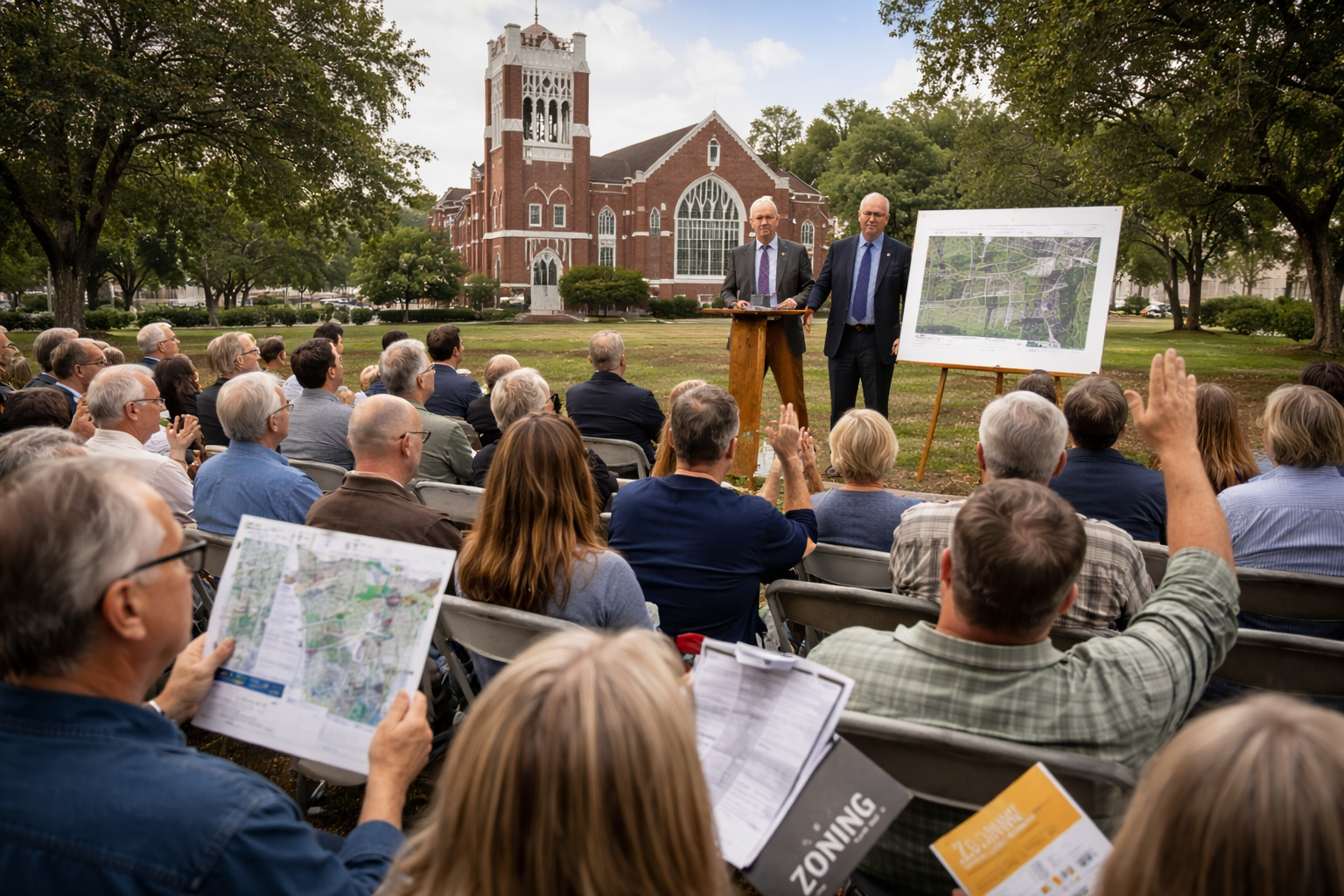
PINELLAS COUNTY — Following a proposal to build affordable housing on church-owned land, nearby residents were observed this week rapidly developing an intense and highly specific interest in zoning regulations, land-use codes, and municipal procedure.
Within hours of the announcement, neighbors who previously described local government as “corrupt,” “confusing,” or “not worth paying attention to” began citing setback requirements, traffic studies, and density ratios with professional confidence.
“I’m not against affordable housing,” said one resident, before opening a folder labeled Zoning Concerns that appeared to have been assembled overnight. “I just think this particular parcel raises some legitimate questions about ingress, egress, and the overall character of the area.”
Community members stressed repeatedly that their concerns were “purely procedural,” even as they interrupted presenters to ask whether the proposed housing would increase noise, reduce property values, or introduce “unknown variables.”
Several neighbors reported spending the weekend reviewing zoning maps they had never previously noticed existed.
“I didn’t even know what R-3 meant before,” said another resident. “Now I’m just asking whether this development complies with subsection 14.6(b), which I absolutely didn’t Google five minutes ago.”
Church officials explained that the proposal aligns with the organization’s mission and uses land that has remained largely unused for years. They also noted that the project meets existing zoning allowances, a statement that prompted immediate objections from residents who had just learned what zoning allowances were.
At a packed community meeting, neighbors assured officials they fully supported affordable housing “in theory,” while requesting additional studies, delays, and clarifications that would push any construction well into the future.
“We’re just asking questions,” said one attendee, moments before asking the same question for the fifth time. “Is that not allowed anymore?”
City planners confirmed the proposal had triggered an unusually high level of public engagement, much of it focused on traffic, parking, and “how things have always been.”
“It’s impressive,” said one official. “We wish this many people showed up when we actually needed feedback.”


Lorem ipsum dolor sit amet, consectetur adipiscing elit. Suspendisse varius enim in eros elementum tristique. Duis cursus, mi quis viverra.